
Fillmore Parole and Probation Compared
Probation is a court-ordered sentence served in the community under stated terms. Fillmore County Community Corrections supervises local adult felony, gross-misdemeanor, misdemeanor, and pretrial matters assigned to it. Minnesota parole is narrower than the word is often used. The Supervised Release Board handles specified life, indeterminate, certified-adult, and covered criminal-sexual-conduct cases. Many determinate prison sentences move into supervised release under statute without a discretionary parole grant.
| Record type | Source of authority | Best verification |
|---|---|---|
| Probation | District court sentence or pretrial order | MCRO case record, then Fillmore Community Corrections when that office is named |
| Supervised release | MN DOC executed sentence | MN DOC Offender Search and the public supervising office field when present |
| Board parole or release | Supervised Release Board decision in a covered case | Agenda, approved minutes, DOC status, and final release record |
| Final discharge | End of sentence or authorized discharge | DOC or board certificate and discharge record |
- Probation
- Community supervision ordered by a court instead of, or after, custody.
- Supervised release
- The community portion of a state prison sentence while DOC authority continues.
- Parole
- Conditional community release used in the limited Minnesota cases under board jurisdiction.
- Discharge
- The end of the sentence and its supervision obligation.
The label matters. “Under Supervision” is not the same as “sentence discharged.” A projected release date is not an actual exit. Likewise, a court sentence to probation does not establish the minute that Fillmore jail staff processed a release. Keep the court, jail, DOC, and board records in their proper roles.
Verify Fillmore Post-Release Supervision
Start with a known case or correctional identifier. Fillmore Community Corrections publishes contacts, not an open person-search roster. Calling an agent simply because a person disappeared from the jail roster would skip the key question: did a court or DOC record actually place that person under the office’s supervision?
- Use Minnesota Court Records Online to locate the Fillmore County case. Read the disposition and sentence language.
- If the record says probation or local supervision, note the case number and identify the office named in the order.
- If the person was committed to state prison, search the MN DOC Offender Search by DOC number or name.
- Read the exact DOC status, applicable date fields, and public supervising agent or office data. Do not shorten “under supervision” to “discharged.”
- For a covered life or indeterminate case, review the board schedule, agenda, approved minutes, and later DOC status.
A missing Fillmore jail entry identifies no supervision status. Confirm the sentence before contacting a local or state supervision office.
When a state search no longer carries a person because its public jurisdiction window has ended, request the discharge certificate or record from MN DOC or the board. The Fillmore County released-inmate search explains how the jail release or transfer event fits beside these supervision records.
Fillmore County Supervision Office
Fillmore County Community Corrections is located in the lower level of the county courthouse. The county publishes a main number and named adult agents, which provides a direct local route when the court record already identifies Fillmore supervision. At the July 24, 2026 source review, the directory identified Director Tom Jensen at 507-765-2679, adult felony agent Jon King at 507-765-2684, agent Shelly Topness at 507-765-2683, and Tori Gilman at 507-765-2682 for adult misdemeanor, gross-misdemeanor, and juvenile work. Kim Waller was listed as case aide and office manager at 507-765-2681. Assignments can change, so verify the directory before choosing a contact. The office also handles pretrial work, so office involvement alone does not prove a final sentence.
Fillmore County Community Corrections101 Fillmore Street West, P.O. Box 466
Preston, MN 55965
507-765-3667
The official office page shows its scope and current directory.
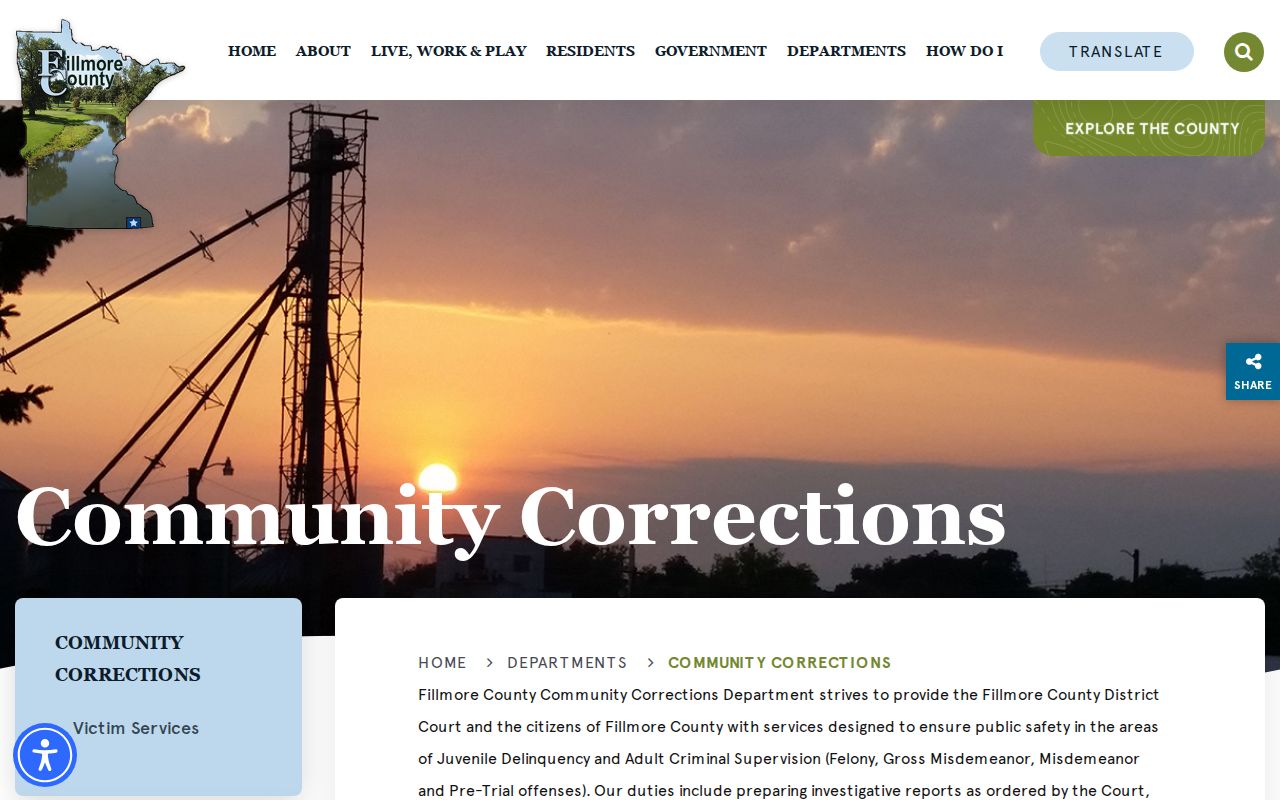
Use the current page to verify the contact before calling. Provide a case number and ask about the correct office route, not private details that are outside public access.
Fillmore Supervision Terms and Violations
Supervision conditions come from the court order, DOC release plan, or authorized board action. Common high-level duties can involve reporting, approved residence or travel, treatment, contact limits, and law-abiding conduct, but the research does not supply one standard Fillmore condition list for all cases. Read the filed order or agency record rather than assuming that one person’s terms apply to another.
A violation allegation does not itself explain present custody. The court or supervising authority may respond in different ways, including a hearing, modified conditions, a warrant, or revocation. “Absconder” generally means a person is alleged to have stopped required contact or left supervision control. It is not a synonym for every missed appointment. No official public Fillmore absconder list was found.
For warrant information tied to the jail FAQ, Fillmore County directs callers to Court Administration at 507-765-3356. An active warrant can affect a release plan or lead to renewed custody, but a name match must be checked against the case. Minnesota VINE can send county jail custody-event alerts. It does not track probation compliance and is not the state-prison alert system.
Predatory-offender registration is another narrow system. The BCA registry overview describes limited public access and cannot be used as a general parole or probation directory. Registration duties and supervision are separate legal questions.
Fillmore County Supervision Notifications
Minnesota VINE reports custody events from county jails and detention facilities, including the Fillmore County Jail. It can send notice of release, bond release, transfer, escape, or another supplied custody change. That alert does not establish probation terms, agent assignment, or discharge. The county also warns users not to depend on VINE alone, so the jail event should be reconciled with the sentence and supervision record.
Minnesota Haven is the separate notification route for people in MN DOC facilities or under DOC community supervision. It should not be confused with a public probation lookup. A court record still identifies a Fillmore probation sentence, while the DOC record identifies state supervised release. The correct alert service can report a change, but the responsible court, corrections office, or board supplies the legal supervision status.
How Fillmore Supervision Ends
Probation ends through the court record. Look for discharge, expiration, early termination, revocation, or a later order that changes the sentence. A person can leave Fillmore County Jail long before probation ends. The release date from the jail therefore cannot substitute for the probation discharge date.
State supervised release ends through MN DOC or authorized board action. Minnesota Statutes section 243.05, subdivision 3 allows the board to grant final discharge in its jurisdiction and issue a certificate. The record can address confinement, prison conduct, parole date, parole record, and the reasons for discharge. That is a stronger source than an old roster snapshot or a missing public-search result.
Discharge also matters for record timing. Minnesota expungement waiting periods for qualifying convictions run from discharge of sentence, not merely release from a county jail or prison. A sealed record is restricted; it is not destroyed. If government data about the person are inaccurate, the correction procedure under Minnesota Statutes section 13.04 is separate from expungement and from changing a court judgment.
Note: Record the exact supervision label and its as-of date because office directories, DOC status, and board materials can change.
Fillmore’s Local Probation Structure
Fillmore County’s local structure is distinctive because Community Corrections publishes named adult agents and a courthouse office rather than sending every inquiry to a broad regional directory. That makes the office useful after a sentence record identifies a local probation or supervision case. It still does not make the staff directory a released-person search tool.
The MN DOC Community Services Directory provides a second routing source. It can be filtered for Fillmore County and distinguishes county or community corrections from regional DOC intensive supervision. That distinction prevents a local probation case from being sent to a prison-supervision office, or the reverse.
Use office contacts for case routing, permitted status verification, and records questions. Immediate safety concerns belong with emergency services. Victims seeking notification support may contact Fillmore County Victim Services at 507-765-2805 during its published weekday office hours, while Minnesota Haven handles DOC custody and release notification.
Fillmore Release Board Records
The Minnesota Supervised Release Board assumed authority on July 1, 2024 for its specified case classes. Its official meeting and review schedule includes upcoming date, time, location, stream details, a current review schedule, and roughly 90 days of past agendas, recordings, and approved minutes. It is not a hearing stage for ordinary county probation or every determinate prison sentence.
Use the review schedule to identify a planned matter, the agenda to confirm presentation, and approved minutes to read the action and vote. Outcomes can grant or deny release, assign a projected date, continue review with directions, modify an authorized posture, or address discharge. Quote the actual verb. A projected date is not a same-day release, and a grant can still be affected by prerelease requirements or later rescission.
If older minutes are no longer on the meeting page, request the record from the board or MN DOC. The final proof chain is the approved decision, the later DOC status, and the actual release or discharge record. Note: Board materials and DOC custody records answer different stages of the same release process.